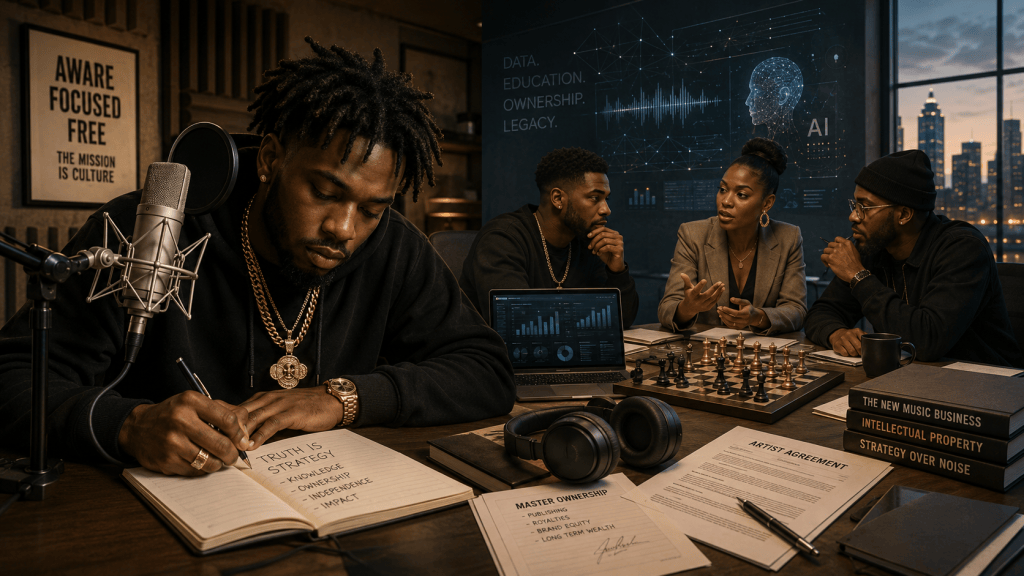
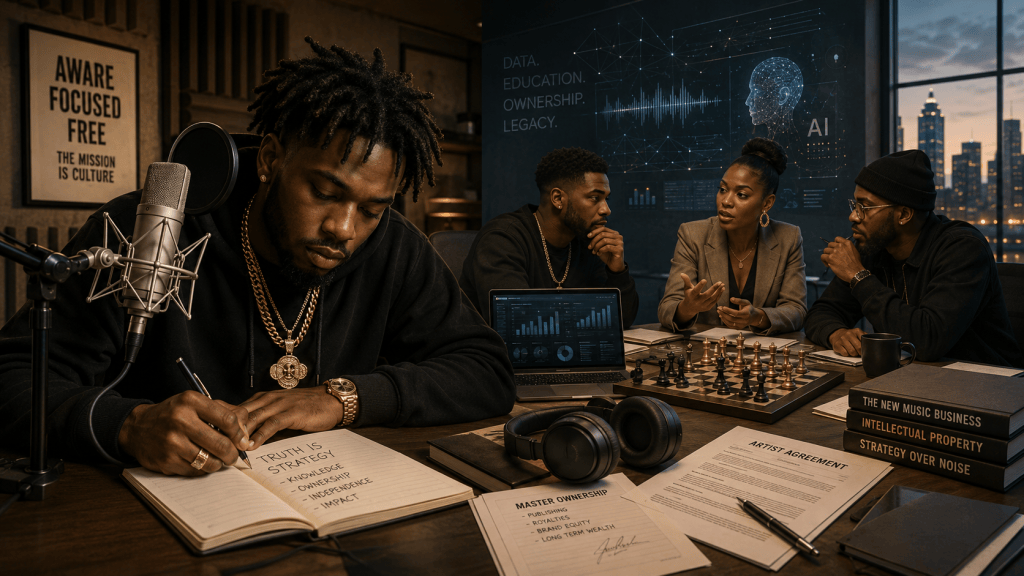
When people turn awareness into an insult, the culture must become even more conscious, strategic and truthful.
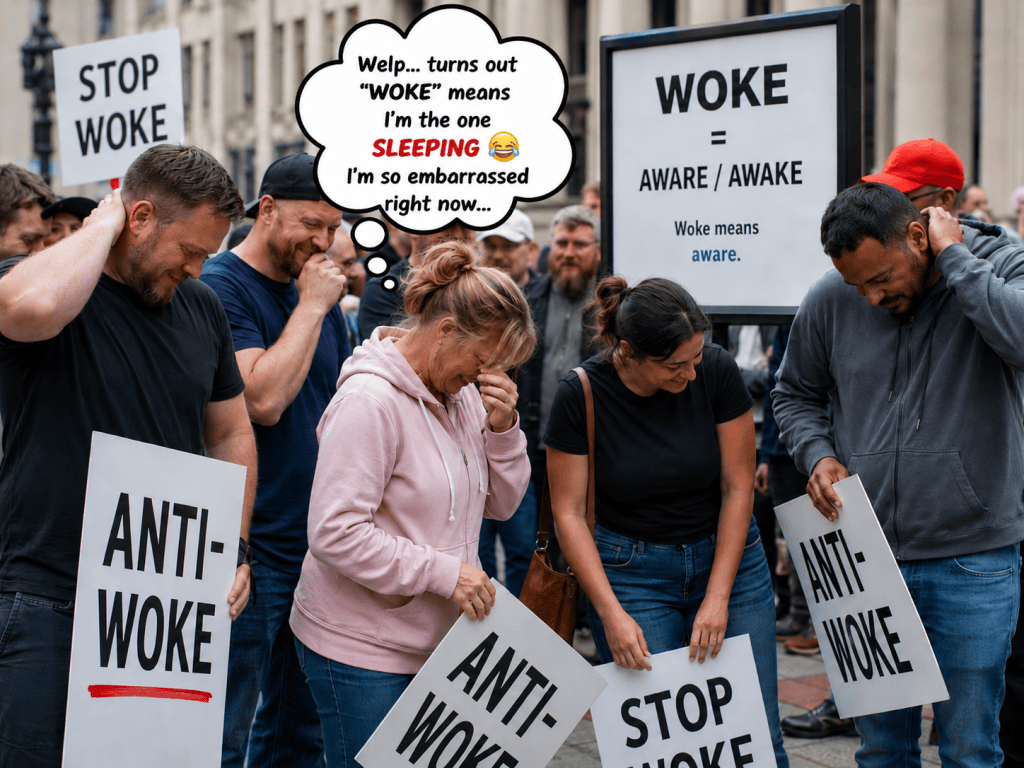
The greatest irony of the anti-woke movement is hidden inside the insult itself.
To be woke means to be awake.
It means to be aware of what is happening around you, conscious of danger, attentive to patterns and unwilling to move through the world with your eyes closed.
So when politicians, commentators and their loyal henchmen proudly declare war on “wokeness,” they are telling the public exactly what they want:
Stop looking.
Stop questioning.
Stop recognizing patterns.
Stop examining who owns what.
Stop asking who benefits.
Stop studying how power works.
Go back to sleep.
Hip-hop cannot afford to accept that invitation.
Not now.
The culture is moving through an age of artificial intelligence, disappearing diversity programs, weakened affirmative-action structures, concentrated media ownership, algorithmic control and growing political hostility toward honest discussions of race, inequality and power.
This is not the moment for rap to become less aware.
This is the moment for rap to become more disciplined, more truthful and more strategic.
Rap the Authentic Lyrics
Hip-hop does not need permission to tell the truth.
Artists should rap what they actually see, know and experience.
That means telling the truth about poverty, policing, ownership, violence, family, education, addiction, ambition, exploitation, spirituality, business and survival.
It also means resisting the pressure to manufacture a false image simply because an algorithm rewards it.
Authentic lyrics do not have to sound like lectures.
Truth can be aggressive.
Truth can be funny.
Truth can be luxurious.
Truth can be street.
Truth can be personal.
Truth can be political without mentioning a politician.
The responsibility is not to make every record educational. The responsibility is to avoid becoming a tool of confusion.
An artist should ask whether the music reflects reality or merely repeats a profitable stereotype.
Does the record tell the audience something honest?
Does it reveal a contradiction?
Does it document a real condition?
Does it preserve the language, emotion and experience of the people who created the culture?
Or does it simply feed destructive images into systems owned by people who do not have to live with the consequences?
Authenticity is not about pretending every rapper must be morally perfect.
It is about refusing to let outsiders define Black reality through the most commercially useful fragments of it.
Tell the Truth, Even When It Is Uncomfortable
Awareness requires honesty in every direction.
Hip-hop should tell the truth about racism, exclusion and unequal power.
It should also tell the truth about violence within the community, poor leadership, self-destruction, exploitation between artists, broken business practices and the glorification of behavior that damages the same people the culture claims to represent.
Being awake does not mean protecting every comfortable narrative.
It means being willing to see clearly.
The culture cannot criticize outside systems while refusing to examine its own.
Record labels should be questioned.
Streaming platforms should be questioned.
Media companies should be questioned.
Managers, promoters and distributors should be questioned.
Artists should also question themselves.
Who owns the masters?
Who owns the platform?
Who controls the audience data?
Who receives the largest share of the revenue?
Who can remove the music?
Who can change the algorithm?
Who can terminate the partnership?
Who owns the building where the event happens?
Who controls the publication covering the culture?
Who benefits from the image being promoted?
Truth becomes strategy when it leads to better decisions.
Educate Your People
Hip-hop has always taught.
It teaches language, fashion, geography, ambition, identity and social behavior, whether artists intend it or not.
The only question is what the culture will teach.
Artists do not need to become professors, but they should understand the influence they hold.
A single lyric can introduce a young listener to ownership, history, politics, investing, technology, health, discipline or strategy.
A podcast can explain how contracts work.
A music video can show something other than consumption.
An interview can discuss publishing, trademarks, touring, taxes, real estate, local government or artificial intelligence.
A platform can introduce its audience to people building institutions instead of only people seeking attention.
Education does not weaken entertainment.
It gives entertainment depth.
The culture should normalize conversations about intellectual property, business formation, credit, local politics, public contracts, coding, artificial intelligence, media ownership and long-term planning.
Young people should know the difference between being visible and being powerful.
They should know the difference between income and ownership.
They should know the difference between celebrity and authority.
They should know the difference between representation and control.
If hip-hop does not educate its audience, someone else will—and that education may be designed to make the audience easier to manipulate.
Think Strategically
Awareness without strategy becomes frustration.
It is not enough to recognize that a system is unfair.
The next question is what can be built.
Artists should think beyond releases.
Build catalogs.
Build brands.
Build publishing companies.
Build media outlets.
Build touring infrastructure.
Build direct relationships with supporters.
Build archives.
Build technology.
Build spaces where the culture can gather without depending entirely on outside approval.
Study contracts before signing them.
Study ownership before celebrating partnerships.
Study the history of a company before becoming its public face.
Study the incentives behind platforms that claim to empower creators.
Study politics beyond presidential elections.
Learn who controls zoning, grants, licensing, school boards, local budgets, cultural funding and public contracts.
Power often operates far below the level of national television.
Strategic awareness means understanding the machinery.
A culture that only reacts to headlines will always be late.
A culture that studies structure can prepare before the crisis arrives.
Do Not Let Algorithms Put the Culture to Sleep
Artificial intelligence and recommendation systems now shape what millions of people hear, see and believe.
The public is increasingly guided by systems it does not understand and cannot inspect.
That makes awareness even more important.
Artists must understand that algorithms are not passive.
They reward certain behaviors.
They amplify certain emotions.
They encourage repetition.
They can make a narrow image of hip-hop appear universal because that image generates engagement.
They can train artists to chase visibility instead of building value.
They can train audiences to confuse frequency with truth.
The culture must use technology without allowing technology to define the culture.
Learn how the systems work.
Study data.
Understand distribution.
Use artificial intelligence as a tool, not as a replacement for identity, judgment or original thought.
Do not hand your voice, likeness, catalog or creative process to a platform without understanding the long-term consequences.
In the AI era, staying awake means protecting not only your ideas, but the data and systems surrounding them.
Reject Performative Sleep
Some people will use anti-woke language because it is profitable.
They will mock awareness to gain applause from audiences that reward resentment.
They will present ignorance as courage and cruelty as honesty.
They will call any discussion of structure an excuse.
They will call any historical knowledge victimhood.
They will call any attempt to organize identity politics, even while organizing their own political base around identity, fear and grievance.
Hip-hop should recognize the performance.
The goal is not always to win an argument.
Sometimes the goal is to make people ashamed of noticing what is happening.
That is why the culture must refuse performative sleep.
Do not pretend not to see racism because someone may call you woke.
Do not pretend ownership does not matter because someone may call you divisive.
Do not hide your intelligence to make others comfortable.
Do not dilute the truth to gain temporary acceptance from institutions that profit from the culture while resisting its independence.
Awareness is not weakness.
Awareness is preparation.
Build Beyond DEI
The decline of affirmative action and corporate DEI should teach the culture an important lesson.
Programs controlled by outside institutions can be changed, weakened or eliminated.
That does not mean those programs never mattered.
It means they were never enough.
Hip-hop must think beyond inclusion.
The goal cannot only be a seat at someone else’s table.
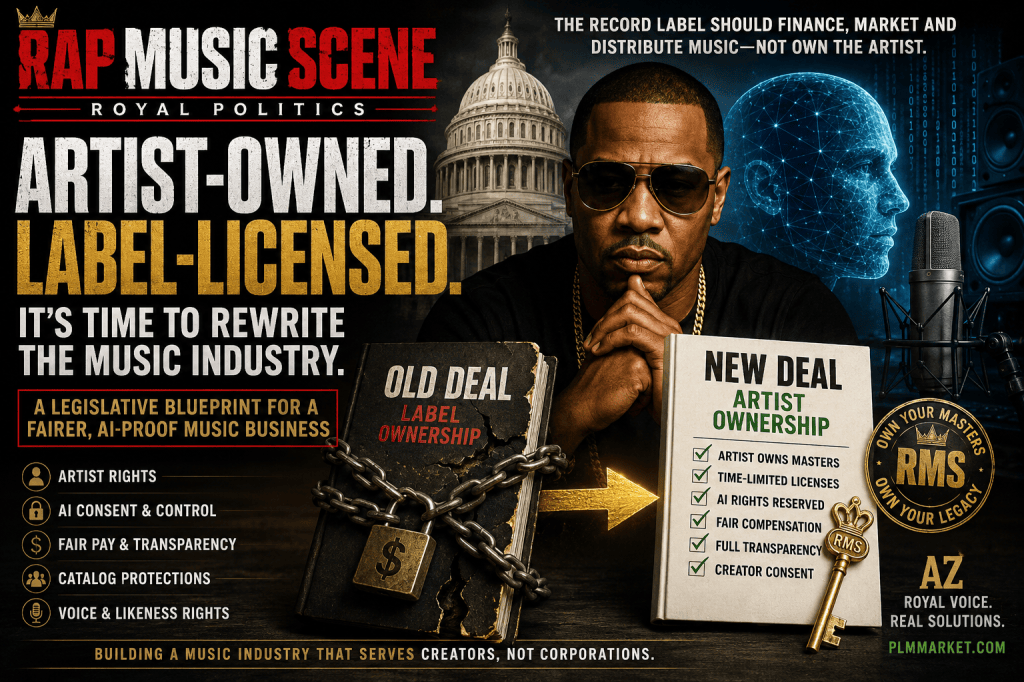
The culture needs tables, buildings, platforms, funds, schools, studios, media companies, technology systems and political organizations of its own.
Representation matters, but ownership determines what survives.
A diverse executive team inside a company owned elsewhere is not the same as institutional control.
A cultural partnership is not the same as equity.
A brand campaign is not the same as infrastructure.
The strategic response to the non-DEI era is not despair.
It is construction.
Build what cannot be withdrawn by a change in corporate policy.
Own what cannot be canceled by a new administration.
Develop knowledge that cannot be erased by changing a slogan.
Stay Awake
Hip-hop should hear the phrase “anti-woke” for what it truly is.
It is an invitation to become less observant.
Less informed.
Less historical.
Less strategic.
Less capable of identifying power.
The culture should reject that invitation completely.
Rap the authentic lyrics.
Tell the truth.
Educate your people.
Study the system.
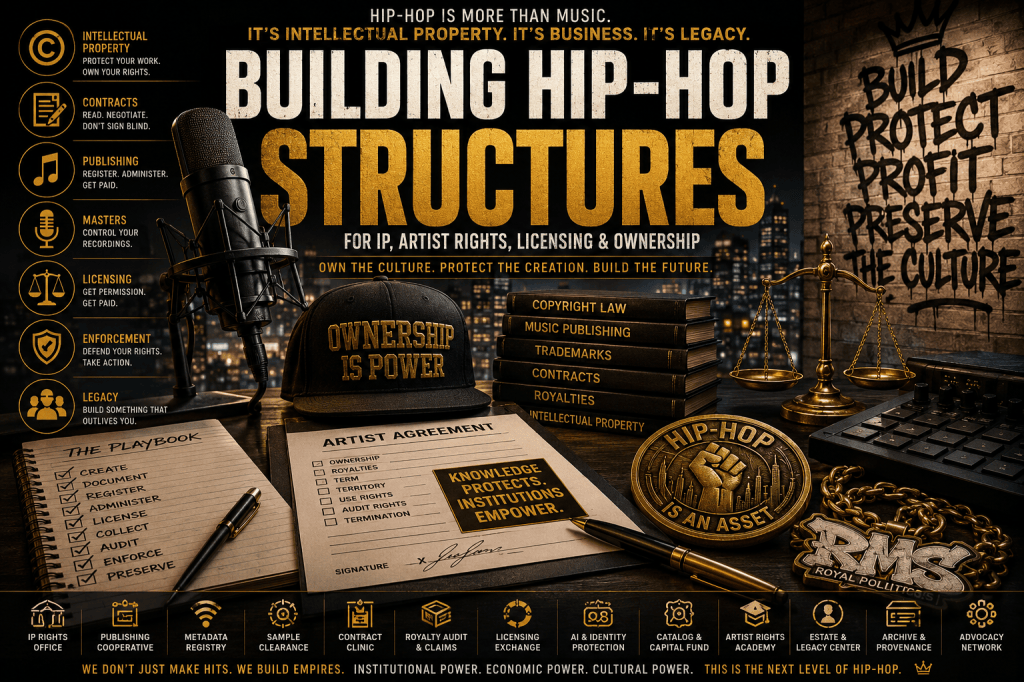
Protect the intellectual property.
Understand the technology.
Build independent infrastructure.
Think further ahead than the next release, trend or election.
Staying awake does not mean agreeing with every political movement or defending every policy placed under the banner of progress.
It means maintaining the ability to think for yourself.
That is the real threat awareness poses.
An awake artist cannot be easily programmed.
An awake audience cannot be easily manipulated.
An awake culture cannot be permanently controlled by people who only understand its commercial value.
Let the anti-woke crowd celebrate sleep.
Hip-hop has work to do.
Stay awake. Stay authentic. Stay strategic.