By RMS Staff
Independent artists were told that digital distribution would set them free.
No label needed. No gatekeeper needed. No physical inventory needed. Upload the music, reach the world, collect the royalties, and build a career on your own terms.
That was the promise.
But the real-world experience for many independent artists is more complicated. Digital distribution opened the door, but it also created a new kind of dependency. Instead of needing a traditional record label, artists now rely on distributors, dashboards, platform rules, automated enforcement systems, support tickets, royalty ledgers, takedown tools, and third-party relationships they do not fully control.
For independent artists, this creates a serious question:
If another company controls the dashboard, the reporting, the takedown process, the royalty flow, and the violation language, how independent is the artist really?
The AVI$U distribution dispute offers a useful case study.
This is not a complaint piece. It is an editorial about structure. It is about what happens when an independent artist places music into a distribution system, then later discovers that the system’s real power sits behind the scenes.
The Promise of Distribution
Digital distribution sounds simple.
An artist signs up with a distributor or distribution partner. The distributor delivers music to platforms like Spotify, Apple Music, Tidal, YouTube Music, and other DSPs. The artist receives reports and royalties through a dashboard. The distributor may take a percentage, charge a fee, or operate under a partnership model.
In theory, this is clean.
The artist owns the music.
The distributor delivers the music.
The platforms stream the music.
The royalties flow back to the artist.
But the problem is that the artist’s ownership does not automatically equal operational control.
The distributor may control the delivery pipeline. The distributor may control the takedown process. The distributor may control royalty reporting. The distributor may control support responses. The distributor may control whether the artist can access the account at all.
That means an artist can own the master in theory while being blocked from the records in practice.
That is the distributor dependency problem.
The AVI$U Case Study
AVI$U, the artist identity of Brian K. Burwell II, built an independent catalog through the Roc Nation/Vydia distribution structure. According to Burwell’s documented timeline, the issues began around July 2025, when catalog availability, royalty accounting, dashboard access, and platform removal became disputed.
A central issue is that AVI$U states he has been locked out of the Roc Nation Distribution dashboard since July 2025. That matters because a distributor dashboard is not merely a convenience tool. It is where an artist may access royalty statements, catalog status, delivery information, payout information, and administrative records.
When an artist is locked out of the dashboard, the artist is not only locked out of an account. The artist may also be locked out of the evidence needed to verify what happened to the catalog.
Burwell raised concerns about royalty accounting and requested review of records. Roc Nation Distribution later referenced artificial streaming allegations connected to digital streaming platform activity. However, from Burwell’s position, the underlying evidence, DSP notice, stream-adjustment data, and full accounting were not provided.
The dispute then expanded.
Burwell requested removal of his music from streaming platforms and payout/accounting of funds. Roc Nation Distribution responded that the removal request had been processed and that changes should reflect within a few business days. Yet, as of the date of this article, two AVI$U releases — Floating Castle and The Light — remain publicly available on Apple Music despite repeated requests to take down the albums.
That fact creates a serious accounting question.
If the albums remain live on Apple Music, then they may have continued generating royalties through streams, purchases, or platform activity. If royalties have accrued while AVI$U has been locked out of the Roc Nation dashboard, then the question becomes unavoidable:
Who has been collecting, holding, reporting, deducting, offsetting, or controlling the royalties connected to those releases?
That is not a minor support-ticket issue. That is a catalog-administration issue.
Roc Nation Distribution has refused, according to AVI$U’s documented position, to provide full accounting or accountability regarding these issues. The company closed an inquiry without producing the requested DSP evidence, royalty accounting, contract authority, takedown logs, access history, or Apple Music status records. Meanwhile, the Vydia inquiry remained open.
Burwell also contacted Vydia regarding overlapping SoundExchange claims connected to his works under Crown State of Mind LLC. Vydia requested the ISRC conflict list and later stated that it had put in a request for the update. That exchange is significant because it suggests that Vydia had some administrative or rights-management footprint connected to the catalog.
In 2026, Burwell contacted Vydia again seeking to create a direct Vydia account and transfer the remaining releases into direct administration and payout control. Instead of receiving a clear transfer process, Burwell later received a notice alleging unspecified “Usage Violation(s),” termination of access, content removal and/or takedown, and possible application of earnings toward alleged fees, liabilities, or losses.
Separately, Roc Nation Distribution issued a revocation notice stating that access had been revoked due to artificial streaming practices, that takedowns had been initiated, and that royalties connected to improper activity would not be paid.
The central issue is not merely the allegation.
The central issue is the lack of source records.
Which DSP detected the issue?
Which release was affected?
Which track was affected?
What date?
What evidence?
What royalty period?
What contract provision?
What accounting entry?
What takedown log?
What Apple Music status report?
What dashboard access history?
What funds were received, held, deducted, offset, forfeited, or paid?
Those are not emotional questions. Those are normal business questions.
If a distributor or distribution partner can revoke access, allege violations, initiate takedowns, and withhold or deny royalties, then the artist must be able to see the records supporting those actions.
Without those records, the artist is asked to trust a closed system.
There are public complaints that sound similar to AVI$U’s experience. For example, one Reddit post alleges that Roc Nation/Vydia/FUGA-related distribution changes left the artist without access to royalties, that content remained live, that the artist was told the song was fraudulent, and that support tickets were closed without an answer. Another Reddit thread claims multiple artists were locked out of Roc Nation Distribution accounts without explanation and could not get support responses. These are user reports, not proven facts, but they line up with the same pattern: lockout + royalty access issue + vague violation/fraud language + closed/no-response support.
Public complaints and artist reports raise a serious transparency question: when an independent artist is locked out of a distributor dashboard while releases remain active on DSPs, what happens to the royalty reporting, payment history, and funds generated during that period?
When multiple independent artists report being locked out of distribution dashboards while royalties, catalog access, and platform activity remain unclear, what accountability process exists to protect the artist?
The Apple Music Contradiction
The Apple Music issue is one of the clearest parts of the case study.
If Roc Nation Distribution previously stated that removal was processed, and if Vydia later referenced content removal and/or takedown, then the continued public availability of Floating Castle and The Light raises a direct operational contradiction.
Either the takedown was not submitted, the takedown was submitted but not completed, the releases remain active through an administrative delivery path, or some other backend catalog-control issue exists.
Any of those possibilities requires explanation.
For an independent artist, this matters because public availability can create continuing revenue activity. Even modest streams can generate reporting events. If an album remains live on a DSP, the artist should be able to see the corresponding accounting trail.
That means the question is not only:
Why are the albums still available?
The deeper question is:
Who has access to the reports and royalties while the artist does not?
This is where distributor dependency becomes dangerous. The artist may see the music publicly available while being denied the dashboard access required to verify the revenue connected to that availability.
That is not true independence. That is dependency with branding.
June 30, 2026 — Apple Music / Roc Nation Distribution Chain-of-Custody Update
Apple Music still displays two AVI$U releases: Floating Castle and The Light – EP. On the same date, Roc Nation Distribution Zendesk shows multiple support inquiries marked Solved, including recent tickets, while the creator states no substantive response or resolution was provided. This creates a catalog-chain-of-custody concern because the releases remain publicly available while access, transfer, accounting, or administrative control issues remain unresolved.


The Hidden Layer Behind Distribution
Most fans only see the public layer.
They see whether a song is on Apple Music. They see whether an artist page exists. They see whether an album is available. They see streams, charts, playlists, and headlines.
But artists deal with the hidden layer.
That hidden layer includes:
dashboard access
DSP delivery logs
royalty reports
payment holds
metadata control
SoundExchange claims
Content ID conflicts
takedown instructions
support tickets
violation notices
contract terms
internal account notes
platform communications
This layer matters because it determines who can see the money, who can remove the music, who can dispute a claim, and who controls the catalog’s operational life.
The artist may own the creative work, but the distributor may control the administrative reality.
That is the problem.
A distributor can say content was taken down, but the artist may still see releases live on a platform.
A distributor can say a violation occurred, but the artist may not receive the DSP evidence.
A distributor can say royalties are not payable, but the artist may not see the ledger.
A distributor can say terms were violated, but the artist may not have a signed agreement or a clear acceptance record in hand.
This is where independent artists must become much more careful.
The issue is not whether distributors are always bad. Many distributors provide real value. They can help artists reach platforms, collect royalties, manage metadata, and scale catalog availability.
The issue is that distributors become dangerous when they control the evidence layer and the artist does not.
Why “Artificial Streaming” Allegations Are So Serious
Artificial streaming is a real issue in the music industry. Fake streams, bot activity, paid stream manipulation, playlist scams, and automated activity can damage platforms, distort royalties, and create unfair advantages.
Artists should not engage in artificial streaming.
But the existence of artificial streaming does not justify vague enforcement.
If an artist is accused of improper activity, the artist should receive specific information:
the DSP involved
the content involved
the dates involved
the stream data involved
the policy allegedly violated
the financial impact
the appeal or dispute process
the accounting effect
the evidence relied upon
Otherwise, the allegation becomes a black box.
That is dangerous for independent artists because an artificial-streaming allegation can be used to justify takedowns, account restrictions, royalty holds, deductions, forfeiture language, or future account bans.
If the allegation is valid, the records should show it.
If the records are not shown, the artist has every reason to demand an audit.
Ownership Without Access Is Not Ownership
This is the key lesson.
Independent artists often say, “I own my masters.”
But ownership is incomplete if the artist cannot access:
royalty statements
payout records
contract terms
dashboard history
takedown logs
DSP reports
metadata records
collection-society claims
distribution status
Ownership is not just a legal concept. It is an operational reality.
If the artist owns the music but another company controls the account, the reports, the takedowns, and the money path, the artist’s ownership is weakened.
This is why artists must distinguish between three things:
Creative ownership: who made and owns the work.
Contractual authority: who has the legal right to distribute, administer, monetize, or remove the work.
Operational control: who actually controls the dashboard, reporting, takedowns, metadata, and payouts.
Independent artists need all three to be clear.
Why Direct Sales May Be the Better Model
The AVI$U case study raises a larger strategic question:
Should independent artists rely less on streaming platforms and distributors?
For many artists, the answer may be yes.
That does not mean every artist should abandon streaming immediately. Streaming can still provide discovery, legitimacy, convenience, and audience reach.
But artists should stop treating streaming as the center of ownership.
A stronger model may involve selling directly from the artist’s own website through:
physical CDs
vinyl
limited-edition merchandise
digital downloads
exclusive albums
museum-style releases
non-downloadable sound exhibits
direct fan memberships
private listening rooms
artist-owned archives
bundled books, music, and visual products
The difference is control.
When an artist sells from their own website, the artist can control:
pricing
customer relationship
presentation
product format
catalog context
email list
sales data
payment processor
brand experience
archive structure
release timing
That is not just commerce. That is architecture.
A stream is a fraction of a penny inside someone else’s ecosystem.
A direct sale is a transaction inside the artist’s ecosystem.
That distinction matters.
Physical Products Still Matter
The music industry often acts like physical products are outdated.
But physical products create a different kind of value.
A physical CD, vinyl record, art book, museum box set, signed print, or collector edition is not just audio. It is an object. It is proof of fandom. It is cultural memory. It is direct support. It is harder to erase from a platform. It is not dependent on a distributor dashboard.
Physical products also create clearer economics.
If an artist sells a $25 signed CD or collector release directly, the artist knows the sale happened. The artist controls the customer record. The artist controls the inventory. The artist controls the packaging. The artist controls the experience.
There may still be costs, shipping, taxes, payment processing, and fulfillment issues. But the artist is not waiting for a hidden DSP report filtered through a third-party dashboard.
That is a major difference.
Digital Downloads Still Matter
Digital downloads also deserve renewed attention.
For years, the industry pushed artists toward streaming as if downloads were obsolete. But for independent artists, downloads can still be powerful.
A $10 direct digital album sale can be worth more than thousands of streams.
More importantly, a direct download gives the artist a clearer relationship with the buyer.
The artist can sell through their own store, offer high-quality files, bundle artwork, include liner notes, add bonus tracks, and preserve the album as a complete work.
Streaming broke albums into platform content.
Direct downloads can restore the album as an owned experience.
For an artist building a serious catalog, that matters.
The Museum Model
AVI$U’s current direction points toward a different model entirely: the artist-owned digital museum.
In this model, music is not only treated as streaming content. It is treated as part of a larger archive, exhibit, brand universe, and source-controlled creative system.
The artist does not simply ask, “How do I get more streams?”
The artist asks:
How do I preserve my catalog?
How do I control the presentation?
How do I own the archive?
How do I sell directly?
How do I protect the source record?
How do I reduce dependency on third-party systems?
That is a different kind of independence.
It is not just independent distribution.
It is independent architecture.
What Independent Artists Should Learn
The lesson is not “never use distributors.”
The lesson is “never hand over control without records.”
Before using a distributor, independent artists should ask:
Do I have a copy of the agreement?
Do I know the revenue split?
Do I know the takedown process?
Do I have audit rights?
Can I export royalty statements?
Can I transfer releases out?
Can I remove my catalog at will?
What happens if a DSP flags content?
Will I receive the DSP notice?
Can royalties be withheld?
Can the distributor charge violation fees?
Can they ban future accounts?
What happens to unpaid royalties after termination?
Who controls SoundExchange or neighboring rights claims?
Who controls Content ID?
Who controls the metadata?
What happens if I lose dashboard access?
These questions are not paranoia. They are business hygiene.
The artist must protect the source record before the dispute happens.
The New Independent Standard
Independent artists need a new standard.
No distribution without a saved agreement.
No upload without archived metadata.
No catalog handoff without exit rights.
No dashboard without exportable reports.
No royalty split without accounting access.
No takedown without confirmation logs.
No artificial-streaming allegation without DSP evidence.
No royalty withholding without itemized accounting.
No platform dependency without a direct-to-fan backup.
That is the future.
RMS Perspective
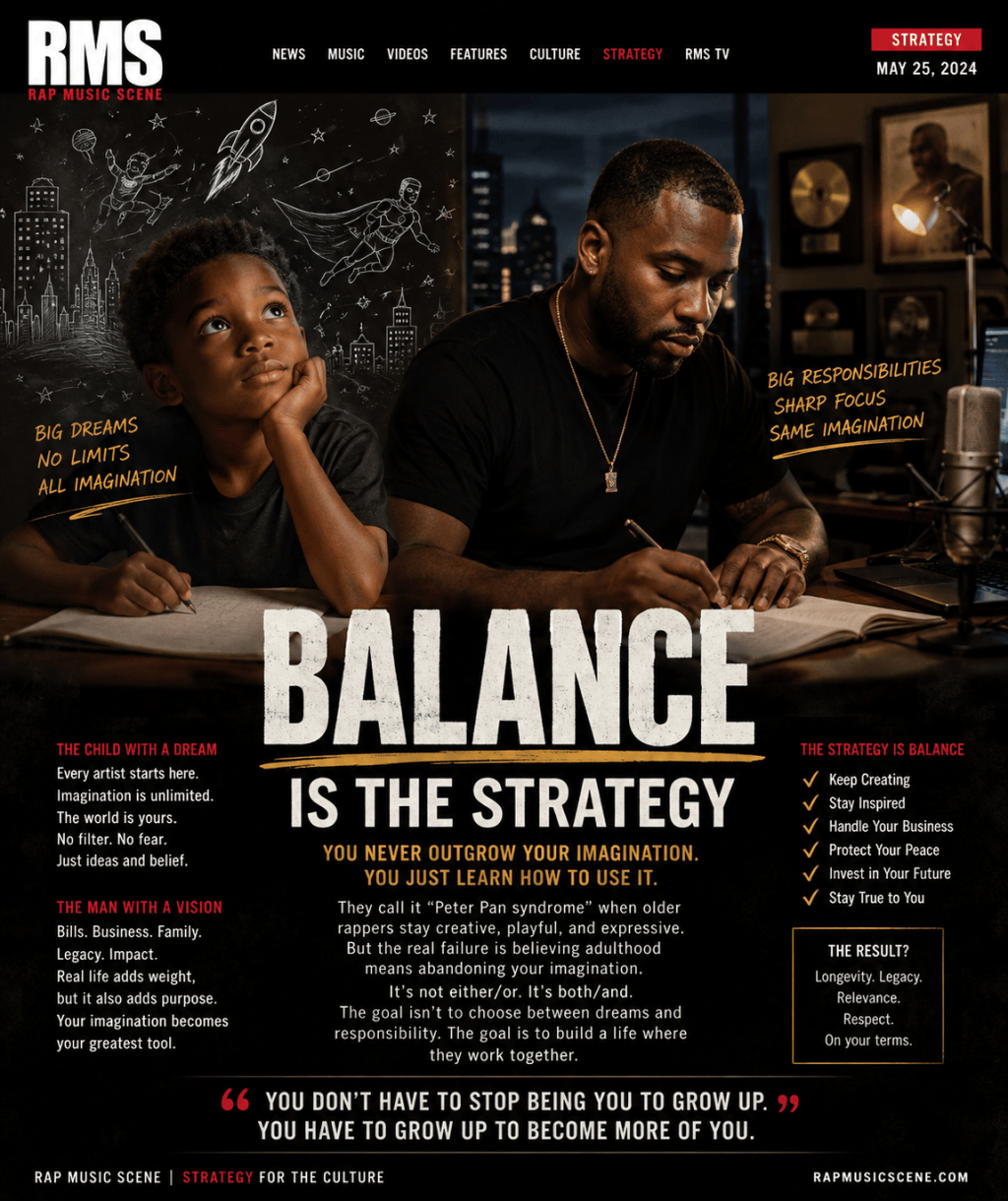
At Rap Music Scene, we believe the next era of independent music will not be won by artists who simply upload more songs.
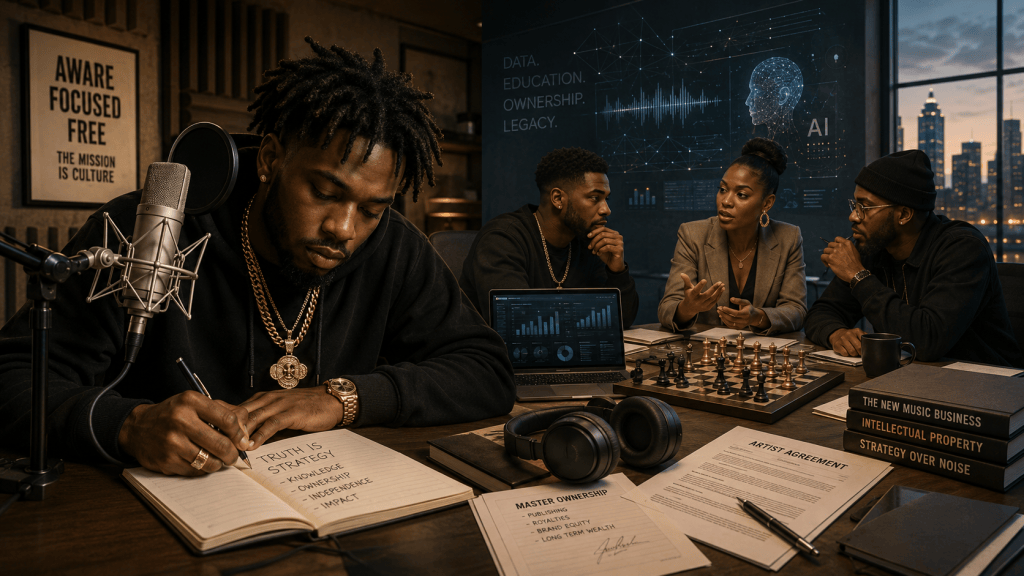
It will be won by artists who control more of the architecture.
Distribution is useful. Streaming is useful. Platforms are useful.
But useful is not the same as safe.
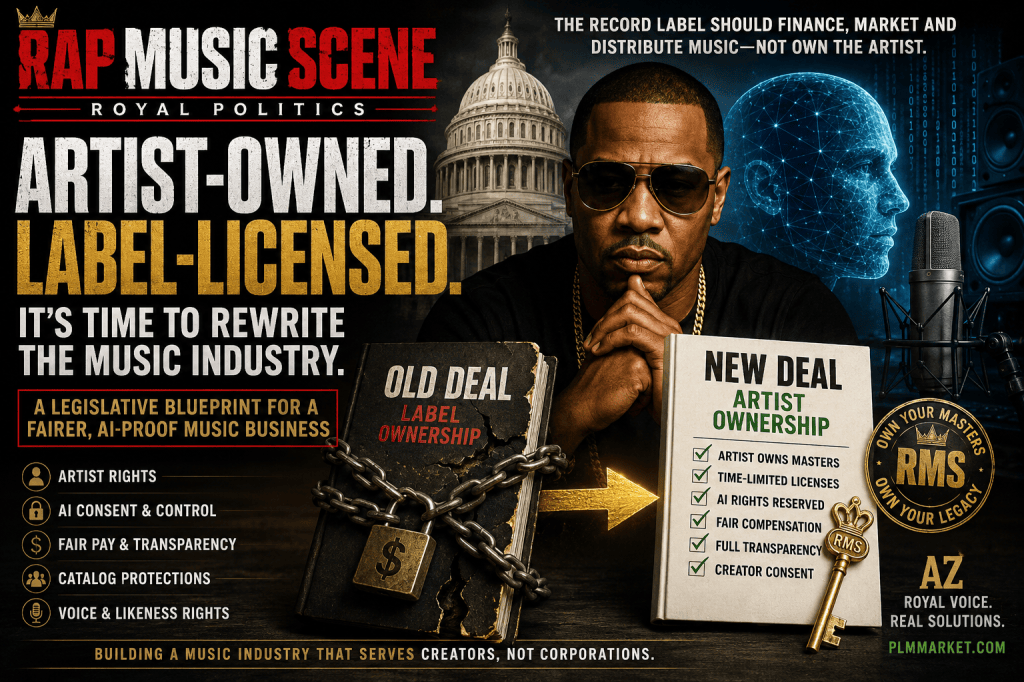
If a distributor controls the dashboard, the takedown process, the royalty statements, and the violation language, then the artist is still dependent on a gatekeeper.
The AVI$U case study shows why artists must think beyond distribution.
Direct sales, physical products, digital downloads, museum-style releases, and artist-owned websites are not old-fashioned. They may be the most modern response to a music business that still hides too much behind dashboards and support tickets.
Final Thought
Streaming has become too contested because it is no longer just about fans listening to music.
It is a battlefield of:
royalty pools
playlist access
algorithmic visibility
fraud accusations
distribution control
dashboard access
metadata control
payment holds
platform politics
media narratives
catalog takedowns
ownership disputes
So when people say, “Just put your music on streaming,” they are ignoring the hidden war behind the upload button.
The issue is not that streaming has no value. It can still help with discovery and public presence. But for an independent artist, streaming should not be the center of the business. It should be treated like a billboard, not the house.
The real business should be built around assets the artist controls:
your own website
direct digital downloads
physical CDs/vinyl/collector editions
artist-owned museum/archive pages
email list
merchandise
limited-edition drops
licensing on your own terms
fan memberships or private access
That way, if a distributor locks the dashboard, a DSP removes content, a playlist disappears, or someone plays games with the royalty pipeline, the artist still has a functioning business.
The future belongs to artists who own the architecture.