
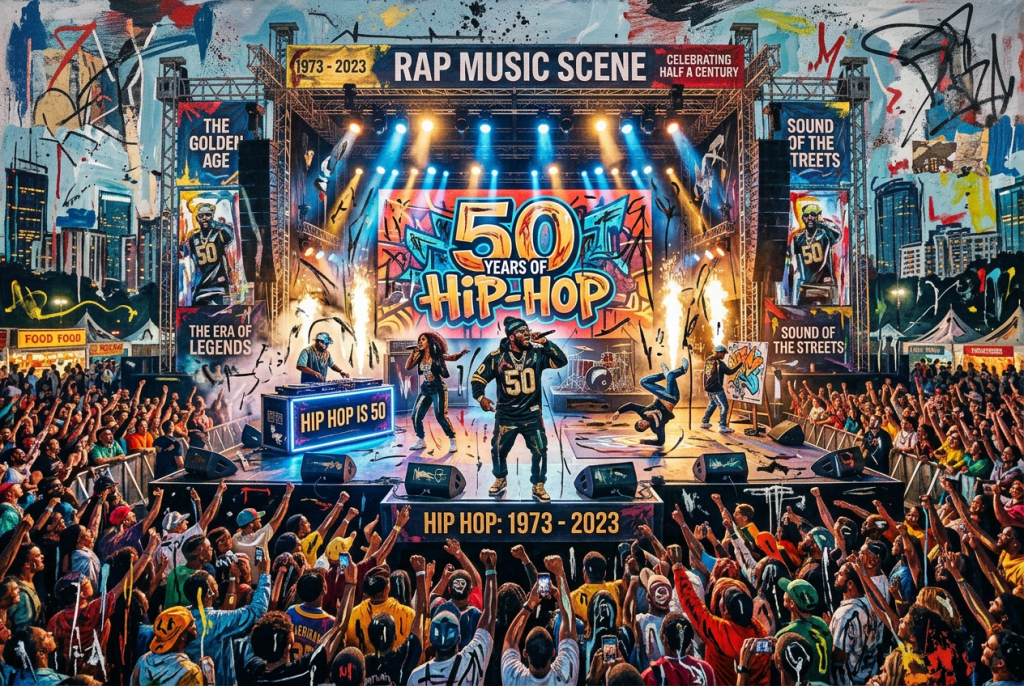
The Living Story of Hip-Hop Culture
Hip-hop has always been bigger than any single artist, trend, or playlist. It is a culture built by many hands — MCs, DJs, producers, dancers, visual artists, organizers, and neighborhood historians who turned everyday realities into global language. This article offers a reflective look at that living story and how it still shapes what we create today.
From Neighborhood Gatherings to Global Movement
Hip-hop began as a response to social, economic, and political conditions that left many communities underfunded and unheard. Parties, park jams, and block gatherings became informal laboratories where young people experimented with sound systems, movement, and style. What started as local expression grew into a movement that now influences language, fashion, film, technology, and activism around the world.
Even as hip-hop has expanded into mainstream spaces, its core has remained rooted in storytelling, resourcefulness, and community. The culture continues to evolve as new generations add their own experiences, vernacular, and digital tools to the mix.
Reflection for creators
- How does your current work reflect the neighborhood, community, or online spaces that shaped you?
- In what ways are you honoring hip-hop as a culture, not just a sound or aesthetic?
MCs: Carriers of Story and Voice
The MC has long been the most visible figure in hip-hop, but the role has never been just about rhyming on beat. MCs serve as narrators, commentators, and translators of lived experience. Through punchlines, metaphors, and wordplay, they compress complex realities into verses that can move a crowd in a few bars.
Today, MCs continue to push form and structure, blending spoken word, melodic flows, and genre-crossing collaborations. Social media has turned verses into instantly shareable artifacts, but the core challenge remains the same: how honestly and creatively can you speak your truth?
Reflection for MCs and writers
- What truths or communities are you representing when you pick up the mic or the pen?
- How can you experiment with flow, structure, or perspective while staying grounded in authenticity?
DJs and Producers: Architects of Sound
DJs were among the first architects of hip-hop, transforming turntables into instruments and parties into portals. By extending breaks, blending records, and manipulating sound, they created spaces where dancers and MCs could respond in real time. The DJ booth became a command center for energy, mood, and movement.
Producers built on this foundation, crafting beats that layered drum machines, samples, live instrumentation, and digital textures. As technology shifted from analog gear to software and mobile apps, production became more accessible, opening doors for bedroom producers and global collaborations. Yet the core questions still apply: what does this beat make people feel, and what story does it invite?
Reflection for DJs and producers
- How does your selection or production honor the roots of the culture while embracing new tools?
- Are you leaving space in your mixes and beats for dancers, MCs, and crowds to respond and co-create?
Dancers: Movement as Memory
From the earliest parties to today’s battles and viral clips, dancers have helped make hip-hop visible. Breaking, party dances, and other street and club styles turned the rhythms of the music into physical language. Each spin, freeze, groove, and gesture carried echoes of local styles, personal history, and cultural memory.
Today, dance remains a critical bridge between generations. Choreographers translate classic moves for new audiences. Online platforms allow dancers to share styles across cities and continents in seconds. Whether in a cypher, a studio, a battle, or a living room, the body continues to archive and reinterpret hip-hop’s story.
Reflection for dancers and choreographers
- What line can you draw between the steps you do today and the early dance forms that helped shape hip-hop?
- How can your movement pay respect to the past while speaking to the realities of this moment?
Visual Artists: Writing the City, Designing the Future
Graffiti and other visual expressions emerged alongside the music, turning walls, trains, and everyday spaces into canvases. Writers and painters developed distinctive letterforms, characters, and color philosophies that pushed back against invisibility, marking presence in environments that often overlooked them.
As hip-hop matured, visual aesthetics flowed into album art, merchandise, film, photography, and digital design. Today, the same creative spirit appears in everything from murals and gallery installations to motion graphics and augmented reality experiences. The visual language of hip-hop continues to question who gets to design the world we live in.
Reflection for visual storytellers
- Where do your lines, shapes, and colors come from — which streets, memories, and mentors?
- How can your designs challenge erasure and make space for stories that rarely appear on billboards or timelines?
Organizers and Community Builders: Holding the Center
Behind every legendary jam, influential studio, youth workshop, or independent festival, there are organizers who rarely step into the spotlight. These community builders book venues, negotiate with local institutions, raise funds, resolve conflicts, document history, and connect generations. They are the ones making sure there is actually a space where culture can breathe.
Community work in hip-hop shows up as mentorship programs, open mics, dance crews, mutual aid projects, and more. While the industry often focuses on charts and streams, these efforts remind us that hip-hop is also about building structures where people can learn, heal, and lead.
Reflection for organizers and culture keepers
- What spaces in your city or digital community are already nurturing hip-hop culture, and how can you support them?
- Where is there a gap — and what small, realistic step could you take to help fill it?
The Influence Continues: Hip-Hop in Today’s Creative Ecosystem
Hip-hop now lives inside streaming algorithms, film scores, brand campaigns, university courses, and global youth culture. Its influence can be felt in how people talk, dress, move, design, and organize. At the same time, the culture is still wrestling with questions of ownership, representation, and access. Who benefits when hip-hop aesthetics are adopted? Who gets credit and compensation? Who gets invited into decision-making rooms?
These questions are not a sign of weakness but of maturity. They show that hip-hop has moved beyond being dismissed as a trend and into a long-term conversation about power, creativity, and community. Each new song, piece, class, post, or project becomes part of that conversation.
Reflection for everyone in the scene
- How are you acknowledging the foundations of hip-hop when you participate in or profit from the culture?
- What collaborations or learning experiences could help you move with more respect, context, and care?
Keep Exploring the Culture
Hip-hop’s story is still being written every day in studios, basements, dance floors, classrooms, collectives, and community centers around the world. If you create, organize, design, or simply care about the culture, there is always more to learn.
At Rap Music Scene, we’re committed to highlighting the people, projects, and ideas that keep hip-hop moving forward while staying grounded in its roots. Dive deeper into essays, interviews, spotlights, and resources that celebrate the full spectrum of the culture.



Leave a Reply