
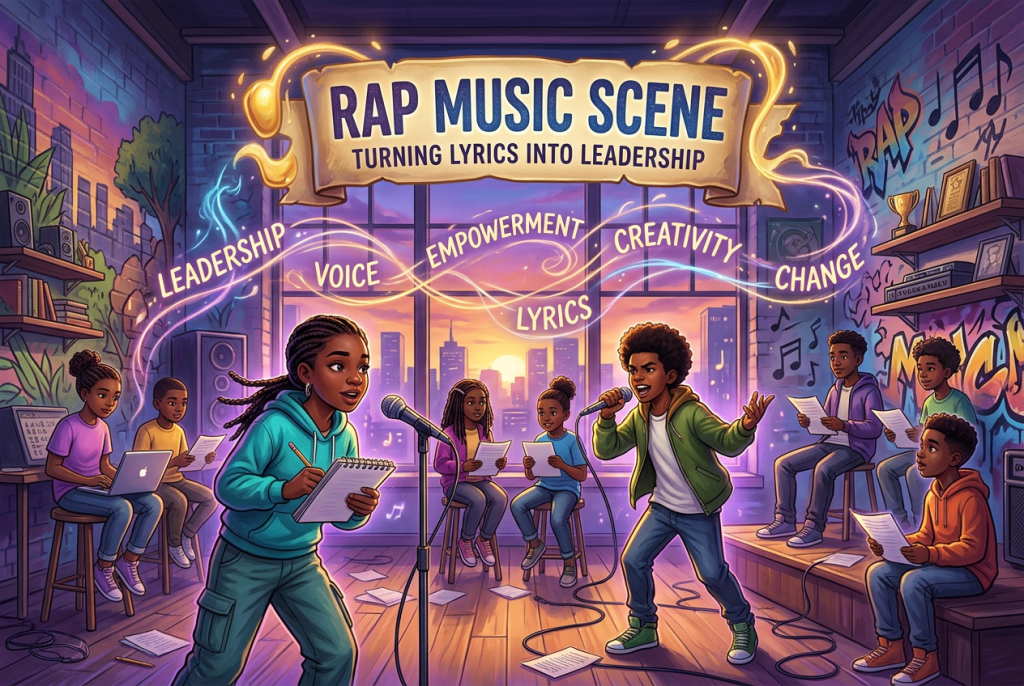
Youth Hip-Hop Programs Are Building Leaders, Not Just Rappers
Across neighborhoods and school communities, youth hip-hop programs are using songwriting, performance, and mentorship to do more than produce tracks. They are helping young people find their voice, step into leadership, and shape positive outcomes for themselves and their communities. When these programs center authentic, positive hip-hop culture, they become spaces where creativity, critical thinking, and social responsibility grow side by side.
Hip-Hop As a Classroom: What Young People Really Learn
Well-designed hip-hop programs treat the studio, stage, or cypher like a classroom with its own expectations and structure. Young creators learn to plan, revise, collaborate, and reflect on their work. They also learn to handle feedback, manage time, and see a project through from first idea to final performance or release.
Songwriting sessions become lessons in storytelling and literacy. Beat selection and arrangement become lessons in decision-making and taste. Rehearsals become lessons in discipline, consistency, and mutual respect. The more intentional the program design, the more these creative skills translate into confidence in the classroom, at home, and in future workplaces.
- Voice: Writing and performing original work helps young people name their experiences in their own words.
- Confidence: Sharing a verse or song in front of peers can transform how a young artist sees their own abilities.
- Critical thinking: Editing lyrics, choosing themes, and shaping a message all require reflection and intentionality.
- Collaboration: Cyphers, group tracks, and crew projects demand listening, compromise, and shared goals.
Mentorship at the Mic: How Adults Show Up Matters
The presence of mentors is often what separates casual creative spaces from powerful youth development programs. In hip-hop settings, mentors may be teaching artists, educators, older peers, or local organizers. Their role is not to control young people’s voices, but to create boundaries where growth and experimentation can happen safely.
Effective mentors model professionalism: showing up on time, respecting the art form, honoring youth perspectives, and being transparent about expectations. They help artists think through the messages in their work, ask questions about impact, and connect creative decisions to real-life choices. Mentorship also means opening doors to resources, platforms, and networks that young artists might not reach on their own.
- Guidance, not censorship: Mentors invite conversation about content and impact instead of shutting down difficult topics.
- Shared respect: Youth and adults agree on clear guidelines for language, behavior, and how people are treated in the space.
- Access: Mentors introduce young artists to opportunities to perform, record, or showcase their work when possible.
- Long-term relationships: Consistent contact matters more than one-time workshops when it comes to growth.
Artist Development Beyond the Studio
When youth programs think like independent labels or artist development teams, they support much more than individual songs. Young people get to explore multiple roles: writer, performer, producer, engineer, designer, promoter, and organizer. Each role teaches a different set of skills that can transfer into many careers, with or without music.
Artist development also includes wellness. Sustainable creative work asks young artists to think about boundaries, rest, and how they manage stress around performance or public feedback. Programs that normalize conversations about mental health, online safety, and financial responsibility give young creators tools to navigate the industry and their everyday lives more safely.
- Creative skills: Writing, recording, performing, and giving or receiving constructive feedback.
- Technical skills: Basic audio recording, file organization, and using digital tools for production or promotion.
- Professional skills: Showing up prepared, meeting deadlines, communicating clearly, and working in teams.
- Life skills: Managing stress, setting goals, and making thoughtful choices about what to share publicly.
Building Positive Hip-Hop Culture in Your Space
Hip-hop culture is bigger than any one artist or sound. In youth programs, culture is built through daily routines, shared language, and how conflict is handled. Spaces that celebrate creativity while refusing to glorify harm allow young people to explore difficult realities without being reduced to them.
Positive hip-hop culture does not mean avoiding hard truths. It means encouraging honesty, complexity, and accountability. Young artists can write about struggle, anger, or injustice while also imagining alternatives, celebrating joy, and highlighting resilience. The key is giving them room to be full people, not one-dimensional characters.
- Honor the roots: Connect music-making to hip-hop’s history of storytelling, resistance, and community building.
- Set shared values: Build group agreements around respect, consent, and how people will be talked about in the work.
- Center youth leadership: Invite young creators to help design events, set themes, and shape the direction of the space.
- Celebrate process, not just product: Applaud drafting, revising, and risk-taking, not only polished performances.
Practical Lessons for Educators, Families, and Young Creators
Because hip-hop is already part of many young people’s daily lives, it can be a powerful bridge between home, school, and community. You do not need a full studio to start building with what you have: simple writing prompts, open mic circles, and beat-sharing sessions can all create momentum.
For educators, families, and youth workers, the goal is to create structures that respect hip-hop as an art form while staying grounded in safety and care. For young creators, the work is about taking ownership of your craft, learning from feedback, and staying curious about the culture you are part of.
For Educators and Program Leaders
- Use songwriting and beat-making as options for assignments, projects, or reflection activities where appropriate.
- Invite local artists or experienced youth to co-facilitate sessions and share their creative process.
- Build clear guidelines for content, language, and behavior that reflect your community’s values.
- Make room for multiple roles so that non-performers can still participate meaningfully.
For Families and Caregivers
- Ask young people about the songs they are making and what those songs mean to them.
- Support practice time the way you would for sports, dance, or any other activity that matters to them.
- Talk openly about media literacy, including how lyrics and images can be interpreted differently by different audiences.
- Celebrate growth over perfection—recognize effort, curiosity, and persistence.
For Young Creators
- Study your favorite artists with intention: pay attention to structure, word choice, and how they build a story or mood.
- Keep drafts and notebooks so you can see your growth over time.
- Seek out trusted mentors and peers who will give you honest, respectful feedback.
- Think about the impact of your words on yourself, your people, and your community.
Keep Exploring Positive Hip-Hop Culture
Youth hip-hop programs thrive when they are connected to a larger culture of learning, dialogue, and creative risk-taking. If you are looking for more perspectives, frameworks, and stories about how hip-hop is shaping lives in real time, there is always more to discover.



Leave a Reply