
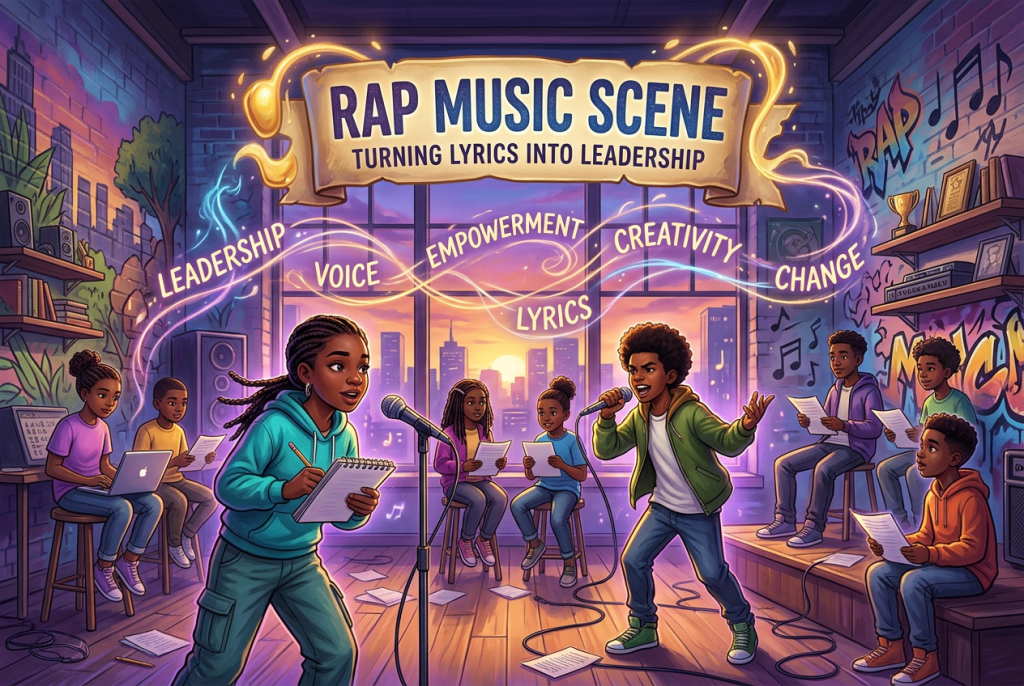
How Youth Hip-Hop Programs Turn Lyric Writing into Leadership
Across community centers, after-school programs, and studio classrooms, a quiet shift is underway. Youth hip-hop programs are moving beyond performance showcases to something deeper: using songwriting and lyric writing as a blueprint for leadership. When young people learn to build verses, they are also learning to build their voices, their confidence, and their role in the community.
From Stage Presence to Self-Belief
For many young artists, the first breakthrough is simply stepping to the mic. Writing and performing original lyrics asks them to share personal stories in front of peers, mentors, and audiences. Over time, that process can help transform nervous energy into self-belief. Each verse finished, each performance completed, becomes proof that they can set a goal, do the work, and show up fully as themselves.
Confidence built in the studio often carries over into classrooms and everyday life. Youth who have practiced owning their perspective in a cipher are often more willing to speak up in discussions, advocate for themselves, and lead group projects. The same courage it takes to test a new song can fuel the courage to try new challenges beyond music.
Lyricism as Literacy
Hip-hop has always been a literature of the streets, and youth programs are increasingly treating it that way. When participants break down rhyme schemes, internal rhymes, metaphors, and narrative arcs, they are doing close reading. When they draft and revise their own lyrics, they are practicing writing skills that echo formal literacy standards, just in a medium that feels authentic and relevant.
Program leaders often encourage young artists to keep notebooks, write daily, and experiment with different structures and themes. The discipline of tightening a bar, trimming a line, or finding a stronger word builds vocabulary and critical thinking. Even without test scores or formal assessments, the gains in clarity, coherence, and expressiveness are visible in the evolution of each track.
Teamwork in the Studio
Rap is often heard as a solo voice, but much of the real work happens collaboratively. Youth hip-hop programs routinely ask participants to co-write hooks, trade verses, give each other feedback, and build full projects together. In the process, they practice the same teamwork skills that drive success in any field: listening, compromise, constructive critique, and shared responsibility.
Sessions where a group shapes a song from scratch can feel like creative labs. Someone suggests a concept, another refines it, and others build around it with flows, melodies, and beat choices. Learning to let go of an idea that does not serve the track, or to support another person’s verse, becomes training in collaboration and emotional maturity.
Mentorship That Mirrors the Culture
Strong youth hip-hop programs are anchored by mentors who understand both the culture and the responsibility that comes with guiding young artists. Rather than imposing one right way to create, effective mentors model curiosity, humility, and professionalism. They help participants navigate everything from stage etiquette and studio etiquette to setting goals and handling conflict.
Mentorship in this context is rarely top-down. Instead, it often feels like a peer-supported ladder, where slightly more experienced artists help newer participants while still growing themselves. This layered structure can extend the impact of each program, as alumni return to lead workshops, co-facilitate sessions, or simply stay connected as positive examples of what long-term engagement in the culture can look like.
Creative Discipline Behind the Mic
Behind every polished track is a long list of drafts, edits, and late-night line checks. Youth hip-hop programs that foreground process as much as product help young people understand creative discipline. They learn to set deadlines, accept revision, and push past writer’s block with practical tools rather than waiting for inspiration alone.
Structure supports this discipline: regular sessions, clear expectations, and opportunities to share works-in-progress. When participants see their own progress from idea to demo to performance, they experience firsthand how consistent effort pays off. That lesson can be carried into schoolwork, jobs, and community projects, reinforcing a mindset of persistence and growth.
Positive Ripples in the Community
As young artists grow through these programs, the impact extends beyond individual participants. Local showcases, open mics, and listening sessions can bring families, educators, and neighbors together around youth-created work. When communities see their own stories and challenges reflected in the music, it can open up new conversations and connections.
Many programs also encourage participants to address real issues they see around them: school climate, neighborhood safety, mental health, or identity. By turning lived experience into art, youth not only process what they’re going through, they also contribute to a culture of honesty and possibility. The studio becomes a space where difficult topics are named, explored, and transformed into something that can move others.
Practical Takeaways for Educators and Artists
Educators, teaching artists, and youth organizers who want to build or strengthen hip-hop-based programs can take several practical cues from successful initiatives.
- Center youth voice. Design sessions that invite participants to choose themes, beats, and directions for their projects. Ownership fuels engagement.
- Connect creativity to skills. Make the link between lyric writing and literacy, between collaboration and leadership, explicit. Help students name what they are building beyond the music.
- Build structured freedom. Offer clear frameworks—writing prompts, time limits, feedback rounds—while leaving room for experimentation and play.
- Model healthy feedback. Teach participants how to give and receive critique that is specific, respectful, and focused on making the work stronger.
- Honor the culture. Acknowledge hip-hop’s history, regional styles, and social context. Treat the art form as a serious craft with deep roots.
- Invest in mentorship. Support experienced artists and educators with training, fair compensation, and time to build real relationships with youth.
- Celebrate process, not just product. Showcase finished tracks, but also recognize milestones like first drafts, first performances, and first collaborations.
Conclusion: Leadership in Every Bar
When youth hip-hop programs treat songwriting and lyric writing as more than entertainment, they unlock a powerful pathway to leadership development. Confidence, literacy, teamwork, mentorship, creative discipline, and community impact all converge in the simple act of putting words to a beat. With thoughtful design and sustained support, these programs can help young people step into their potential—on stage, in school, and in the wider world.
For more perspectives, practices, and stories from across the culture, continue exploring Rap Music Scene’s coverage of hip-hop education, youth creativity, and community-based artistry.




Leave a Reply